E-Commerce
How to Set Up an SEO Organic Growth Strategy?
SEO organic growth strategy is focused on revenue rather than visibility. Build sustainable growth with targeting, content, technical SEO and measurement.
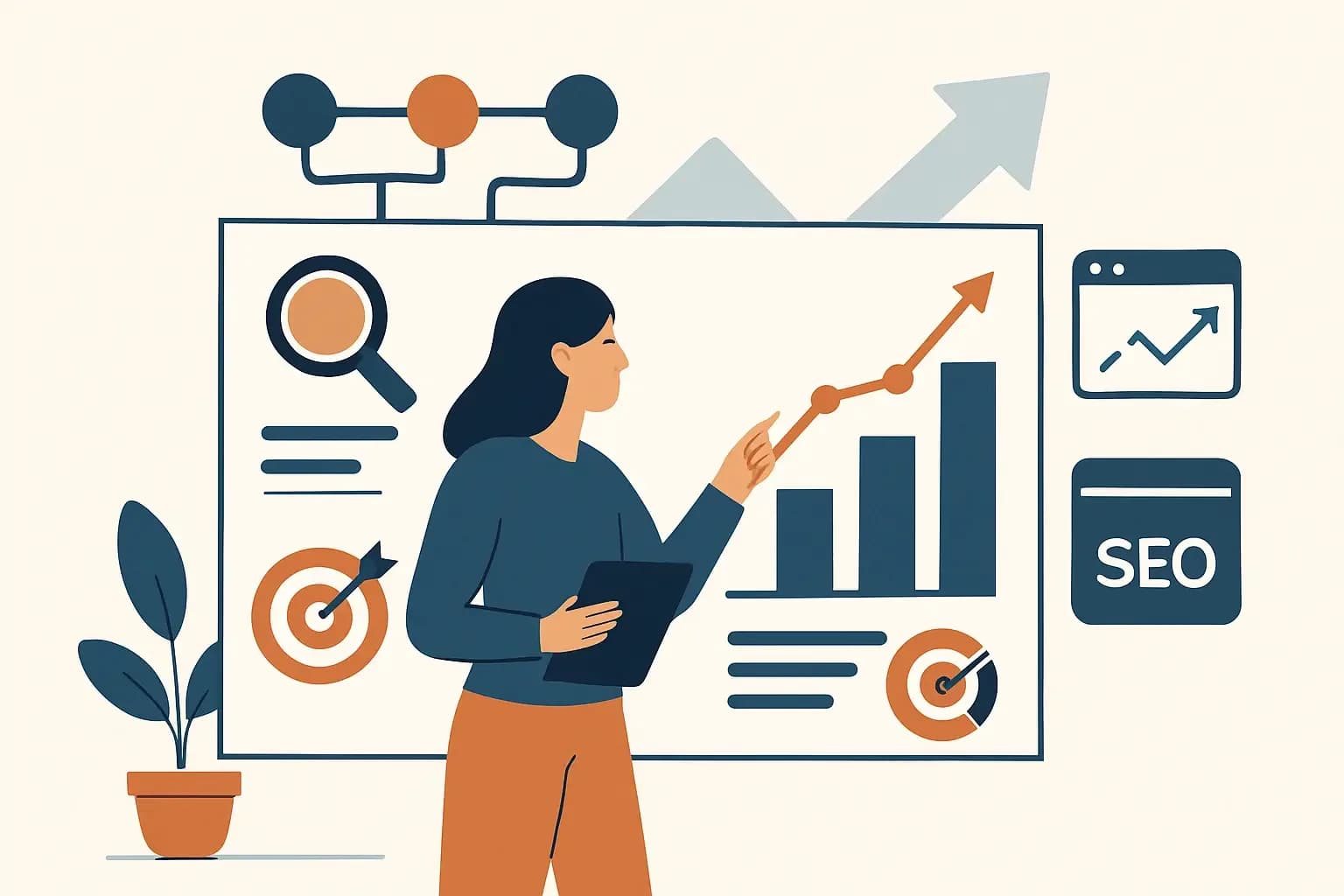
If organic traffic is increasing but sales are not, it is not SEO – it is an incorrectly established growth system. Because "appearing more" in search results is the easy part; The real game is to get conversions for the right query, with the right page, with the right offer and the right experience. This article describes the setup of an SEO organic growth strategy that treats SEO not as a singular channel but as a growth mechanism that produces measurable revenue.
What does SEO organic growth strategy aim for?
The goal of SEO is not “traffic”. Traffic is just an intermediate metric. The strategic goal is for users coming from the organic channel to take a clear action such as purchasing, getting an offer, leaving a demo request. That's why a good strategy starts not with search volume charts, but with unit economics: Which product or service has higher gross margin, which segment has a good closing rate, which average basket or LTV carries growth?
There is a trade-off here. The highest volume queries are generally those with the most general and expensive competition. Queries with lower volume but high purchasing intent yield faster results. The strategy combines “winning” intent in the short term and brand and category visibility in the medium-long term on the same map.
Backbone of strategy: Data, intent, conversion
There are three pillars that connect SEO efforts to growth: the right data set, the right intent match, and conversion design. When we say dataset, we don't just mean Search Console clicks. CRM closeouts, GA4 conversions, product profitability in e-commerce, return rates, campaign impacts and even availability should be part of the search strategy.
Intent matching is “what does the person writing this query want?” is to answer the question realistically. When a user writes “best Wrong format means wrong expectations and ultimately high bounces and low conversions.
Conversion design is an often neglected part of SEO. Building a bridge between the search and the page is not enough; It is necessary to facilitate the user's decision within the page. Trust signals, clear bidding, smart CTAs, fast performance and frictionless form flow determine the ROI of SEO.
Connecting keyword research to the sales pipeline
Classic keyword research is based on “volume and difficulty”. In the growth-oriented approach, there is a third axis: income potential. Here's how you set it up in practice: You match your product or service groups, target customer types, and purchasing stages in the same table.
E-ticarette bu eşleşme daha keskindir. Kategori sayfaları genellikle “geniş niyet” taşır: örneğin belirli bir ürün grubunu arayan kullanıcı. Ürün sayfaları ise “net niyet” taşır: model, özellik veya marka arayan kullanıcı. Blog veya rehber içerikler ise erken aşama talep yaratır ama tek başına satış garantilemez. Bu yüzden içerik planı, kategori ve ürün sayfalarının performansını destekleyecek şekilde kurgulanır.
On the B2B side, query intent revolves more around the problem and solution. The goal here is not for a single page to get traffic; The right page carries the right persona to the right offer page. In other words, while SEO fills the top of the sales funnel, it should also feed the conversion mechanism at the bottom.
Content architecture: Clusters, page roles, and the “one job” principle
Google's direction in recent years has been clear: subject authority over scattered content. The practical equivalent of this is working with content sets and page roles. Each page should have one main job. If a page tries to be both a “general guide”, a “price page” and a “product list”, it will neither satisfy the user nor the search intent.
There are two critical issues here. The first is cannibalization: multiple pages targeting the same intent eat into each other's rankings. Second, internal link architecture: moving authority to the right pages. In clusters, broad intent pages (category or main directory) feed subpages; Subpages also hyperlink to conversion pages.
Quality in content does not mean “long text”. Quality means solving the caller's job. Sometimes this means giving a clear answer with a table, sometimes it means comparing the options and simplifying the decision criteria. Each content should be published with a measurable goal: ranking in the top 3 for a specific query set, increasing form conversion from a specific page, or driving organic revenue to a specific product group.
Technical SEO: Sustainable indexability, not speed
When technical SEO is discussed, everyone thinks of speed. Yes, speed is important, but it alone does not bring growth. The main risk areas for sustainable organic growth are: crawlability, indexability, duplicate pages, incorrect use of canonical, bloated filter URLs, thin content and structured data errors.
These risks are greater in e-commerce because the number of products increases, variants multiply, and filters multiply uncontrollably. Result: Google bots cannot allocate enough budget to valuable pages. The solution is URL strategy, correct noindex decisions, clear canonical architecture and category pages generating unique value.
Additionally, the schema side can make a difference on CTR, especially in product, review, FAQ and organization markups. The action here is not to "get rich results", but to make the message in the search result clearer. Higher CTR means more traffic on the same position; More traffic also comes with the right conversion design.
Authority and trust: Evidence building, not link building
Link issues are generally either exaggerated or done incorrectly. Authority in organic growth is not just the number of backlinks; brand searches, testimonials, in-industry visibility, citable content and the “it works” time users spend on the site work together.
Looking for a “quick win” on the backlink side may seem attractive in the short term, but it carries risks. Links, especially from irrelevant, low-quality networks, can be destabilizing in the long run. The safer approach is to produce truly benchmark assets: comparisons, data-driven reports, clear guides, sample calculations, sectoral benchmarks. These both make it easier to get links and create trust in the conversion process.
Measurement: Weekly cadence, testing culture, ROI discipline
The biggest problem with SEO is that it hides behind the "delayed effect" excuse. Yes, SEO does not give instant results. But that doesn't mean there isn't something to measure every week. The metrics to be monitored on a weekly basis are not the traffic itself; It's whether there are the right moves on the right pages.
Örneğin aynı sıralamada CTR düşüyorsa başlık ve açıklama testleri gündeme gelir. Belirli sayfalarda trafik artıyor ama dönüşüm artmıyorsa sayfa deneyimi ve teklif netliği test edilir. Sepete ekleme var ama satın alma yoksa checkout sürtünmesi, kargo maliyeti veya güven sinyalleri sorgulanır. Bu noktada A/B testleri, SEO’yu “içerik üretimi” olmaktan çıkarıp “dönüşüm optimizasyonu” ile birleştirir.
In e-commerce, the performance of the organic channel should not be read independently of the campaigns. Organic search behavior changes during promotional periods. Driving traffic for out-of-stock products can cause losses. Therefore, the SEO plan must work in harmony with the commercial calendar.
Implementation plan: 90-day realistic roadmap
The first 90 days decide the fate of the strategy. The first month is generally aimed at technical clean-up, monitoring infrastructure, and quick edits to the highest impact pages. In the second month, content clusters and commercial page optimizations gain momentum. In the third month, page-based improvements, internal linking order and authority increasing assets come into play with the signals coming from the measurement.
Here, the "let's do everything at the same time" approach is generally a waste of resources. Pages that already have high traffic but do not generate conversions are often the fastest ROI opportunity. Instead of writing content from scratch, improving intent alignment, message clarity and internal link flow on existing pages can yield faster results. Of course, this varies depending on the industry's competition and current domain strength.
Bu sistematik yaklaşımı kendi ekibinizle kurabilirsiniz; ancak süreç disiplin, düzenli raporlama ve test kültürü gerektirir. Bu noktada Roipas gibi ROI odaklı ajansların farkı, SEO’yu tek başına değil performans pazarlaması, dönüşüm optimizasyonu ve haftalık ölçüm ritmiyle tek bir büyüme sistemine bağlamasıdır.
Common mistake: Thinking SEO is a “content production calendar”
Many teams manage SEO with a monthly blog count target. This is popular because it is easy to manage, but it does not guarantee growth. Because Google rewards user satisfaction and query intent, not publication frequency. Additionally, organic growth is fragile when relying on a single content type. The structures most shaken by algorithm updates are thin content stacks and repetitive pages.
A more durable structure is a structure where content clusters that strengthen commercial pages, technical robustness and conversion-oriented optimizations go together. This structure can generate more revenue with less content. But the condition for this is that every job should be done with a measurable target.
One final thought: Organic growth requires patience, but not uncertainty. Patience is the name of progress measured by the right strategy; Uncertainty is the result of unplanned production. What makes the difference is being able to clearly see what's changing each week and how that reflects in revenue.